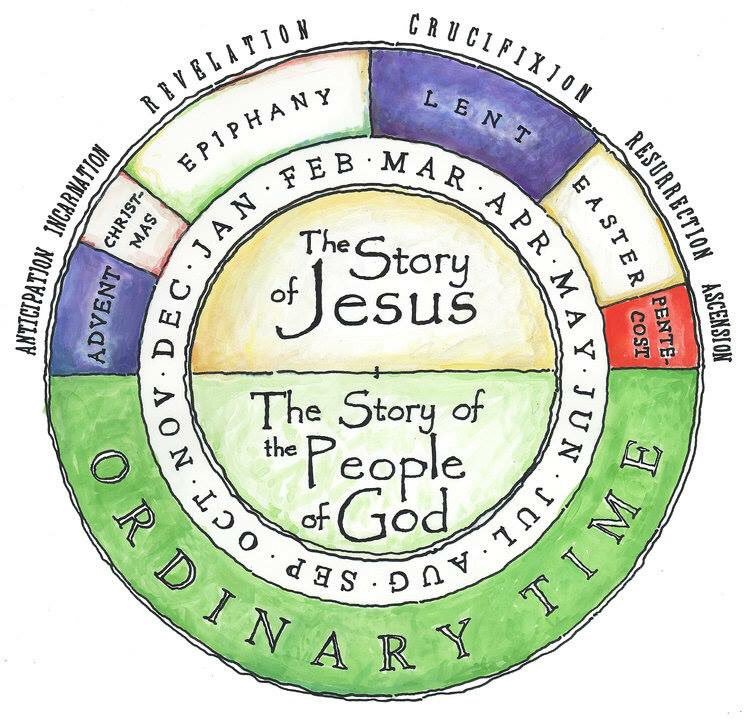
The Christian year is not the same as the calendar year. For instance, the Christian New Year starts not on January 1st, but on the first Sunday in Advent, usually in late November or early December.
It is a cycle of seasons, developed over many centuries, marking out the out the story of Jesus’ life, death, and resurrection, and shaping our worship and daily faith throughout the year.
It begins with Advent; a time of waiting and of hope, when we prepare for Christmas and reflect on waiting for God’s light in the world. Christmas celebrates Jesus’ birth and God becoming human. After this comes Epiphany, which celebrates Jesus being revealed to the whole world.
Lent is a season of reflection and simplicity, remembering the cost of Jesus’ self-giving love and taking time to review our own way of life. It leads to Holy Week, which includes Good Friday, marking the day of Jesus’ execution. Easter follows as the central celebration of Christianity, rejoicing in Jesus’ passing through death and the promise of new life for all creation.
After Easter comes Pentecost, celebrating the gift of the Holy Spirit and the beginnings of the Church. The rest of the year, often called Ordinary Time, focuses on learning from Jesus’ life and teachings and putting faith into practice.
The Christian year is a rhythm of remembering, celebrating, and discering how to live out the Christian story in our everyday life.
Image: Retrieved from www.resources.wesleyan.org